

 CN
 EN
How Furniture Fasteners Influence Product Quality—from Joint Design to Assembly
Release time:2026.11.02
Source:Dexin Metal
Views:2
Furniture quality depends on more than attractive finishes and durable panels. The small components hidden inside a cabinet, desk, or shelving unit help determine how securely it fits together, how easily it can be assembled, and how well it handles everyday use.
For furniture manufacturers, choosing suitable fasteners means considering the complete connection: the panel material, joint design, installation method, and production requirements. Comparing unit prices alone can overlook factors that affect assembly efficiency and customer satisfaction.
Different Connections Need Different Fasteners
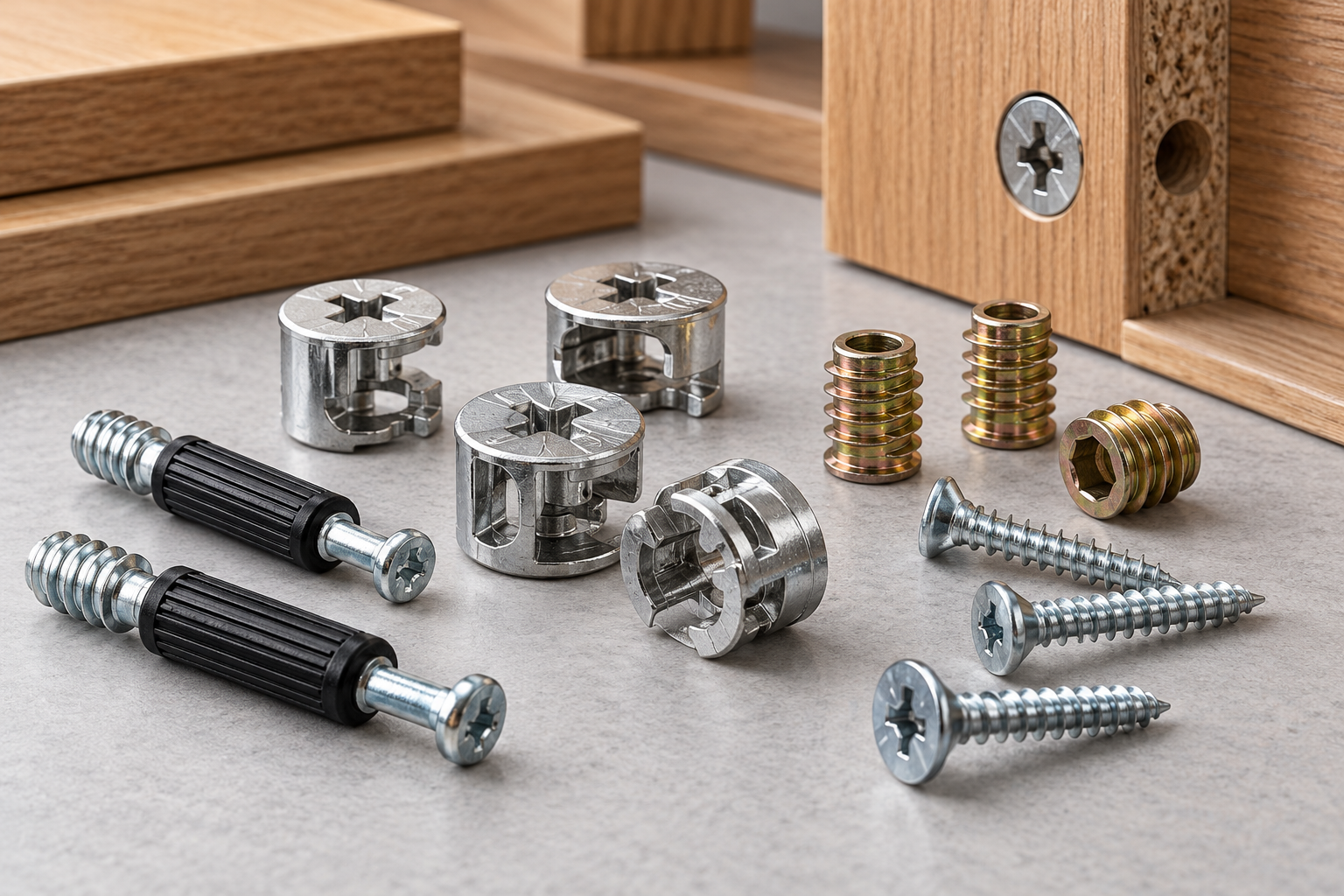
Furniture fasteners perform several distinct functions. Wood screws commonly secure hardware or join wooden components. Cam locks and connecting bolts are widely used in flat-pack furniture. Threaded inserts provide a metal internal thread within a suitable substrate, allowing a matching bolt to form the connection.
These products are not automatically interchangeable. A joint intended for repeated disassembly requires attention to thread durability and the insert’s retention in the panel. A concealed connection must also fit within the available space while meeting appearance requirements.
The starting point should always be the function of the joint. Understanding how the components work together helps manufacturers select hardware that supports both the furniture design and the intended assembly process.
Panel Material Changes Fastener Performance
Solid wood, particleboard, medium-density fiberboard, and plywood have different structures. A screw that performs well in one material may behave differently in another.
Thread geometry, engagement length, pilot-hole size, and distance from the panel edge can all affect the connection. An excessively long screw may penetrate the opposite surface, while an insufficient engagement length may compromise retention. An unsuitable pilot hole can also cause installation difficulties or inadequate holding performance.
Sample evaluation should therefore use the actual panel material planned for production. Testing with a substitute material may fail to reveal problems that appear during final assembly.
Dimensional Consistency Supports Smooth Assembly
A single successful trial assembly does not establish that every component in a production batch will fit correctly.
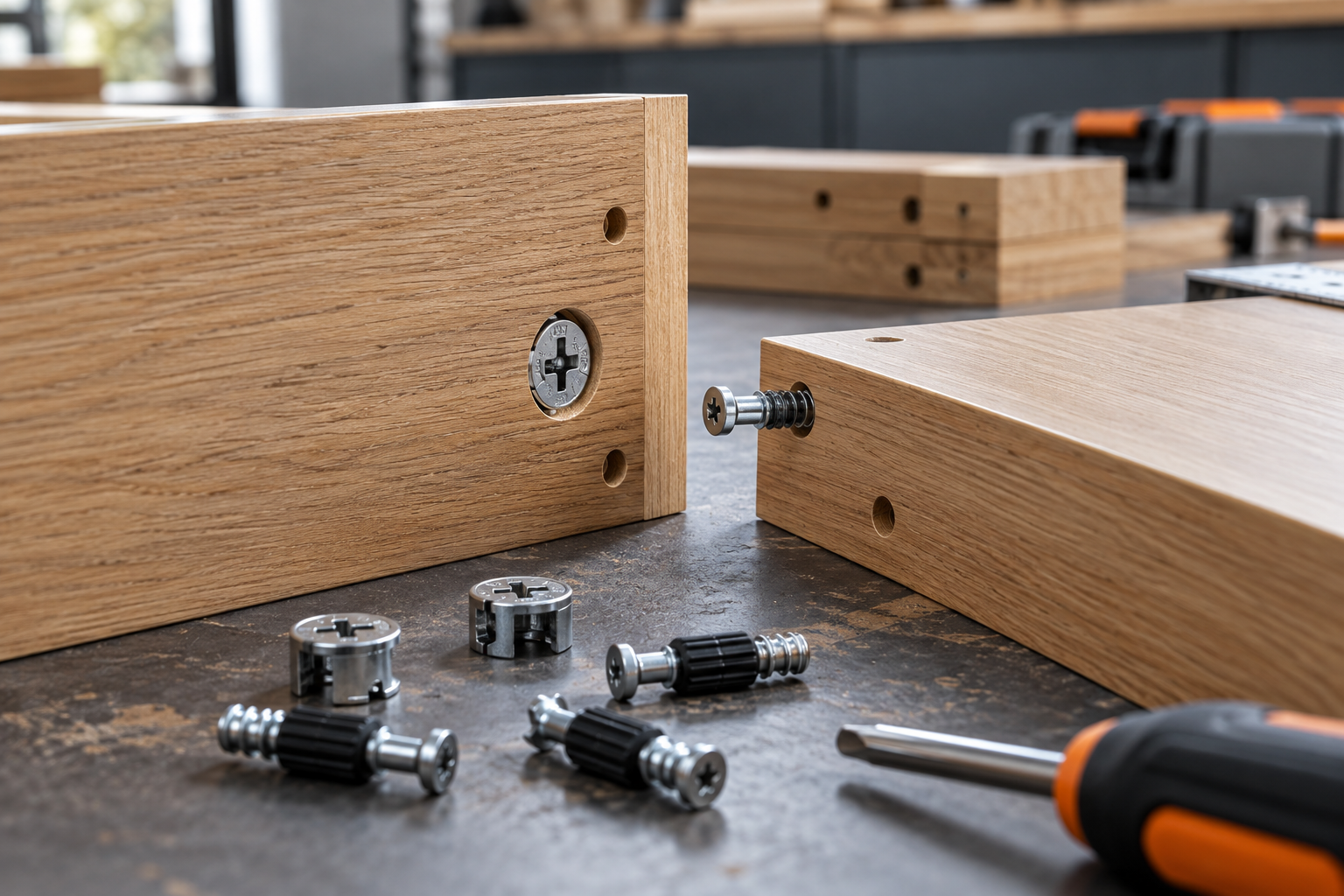
Variations in connecting-bolt length, head dimensions, cam engagement features, and thread dimensions can affect assembly. Problems become more likely when hardware variations combine with panel-hole positioning errors.
Purchasing drawings should identify the dimensions that are critical to fit and function. Inspection methods should also be agreed upon before production begins.
For components supplied as a set, a complete assembly check is particularly useful. Two individually acceptable parts may still produce an unsatisfactory connection if their interfaces have not been evaluated together.
Hardware Packaging Affects Customer Experience
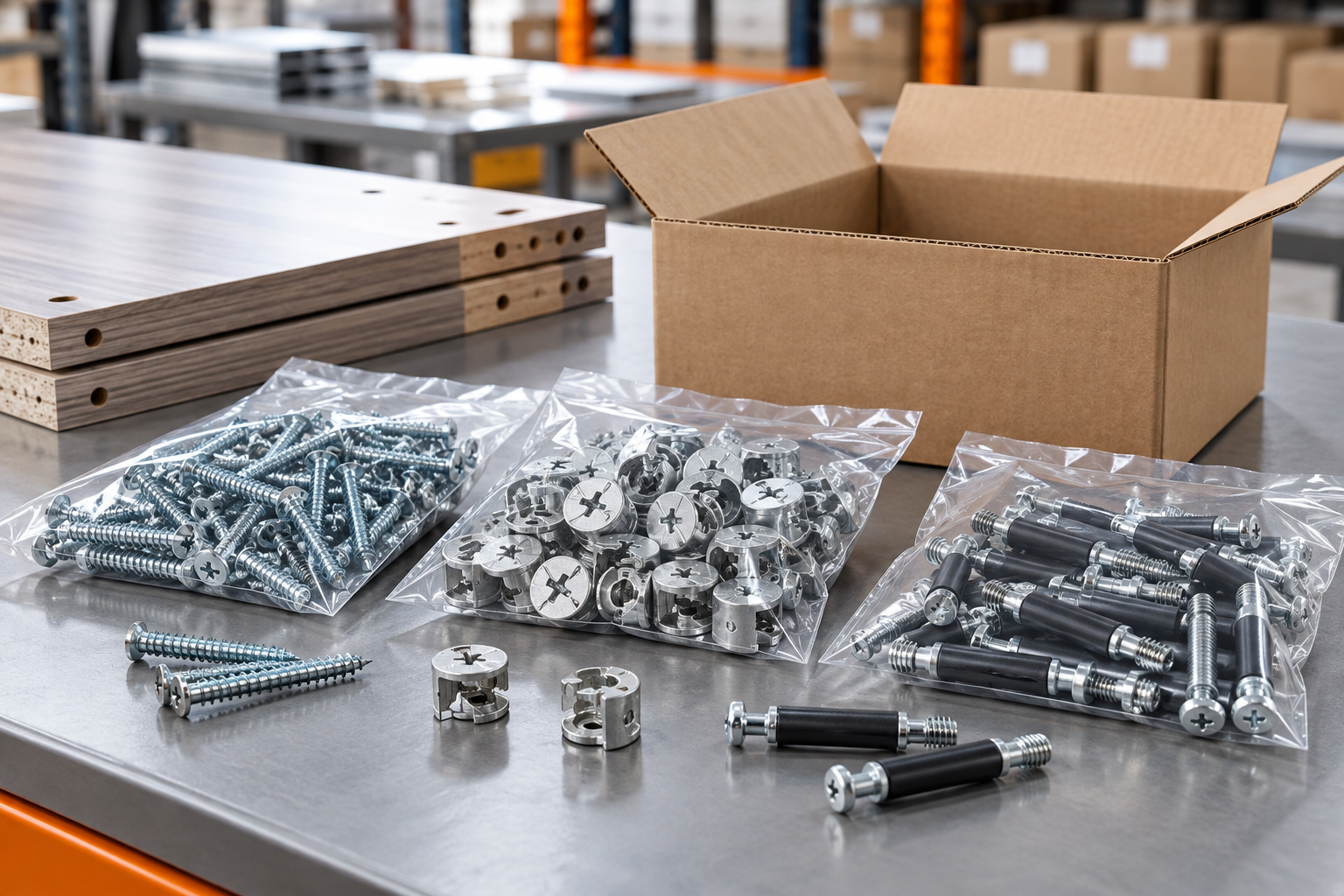
For flat-pack furniture, the hardware pack is part of the product experience. Missing screws, mixed sizes, or labels that do not match the instructions can interrupt assembly and generate service requests.
A suitable packaging specification should define part identification, quantities, separation methods, and protection requirements. Similar-looking screws with different lengths should be clearly distinguished.
Export packaging should also account for handling, moisture exposure, and abrasion during transportation. The objective is to deliver hardware that remains identifiable and ready to use when the customer opens the package.
Evaluate the Complete Furniture Connection
Dexin Metal has 25 years of export experience and manufactures furniture connecting hardware, screws, nuts, threaded inserts, and custom components.
For new projects, sharing drawings, panel specifications, mating components, and packaging requirements helps establish a clearer starting point. Early communication makes it easier to address fit and assembly questions before mass production.
Well-chosen furniture fasteners support a reliable connection between product design and practical manufacturing. Attention to these small components can help improve assembly consistency throughout the supply chain.
News recommendation

25 Years as IKEA Priority Supplier: Reliable EU-Standard Furniture Hardware Solutions
2026-08-26
Fastener Sourcing After Phase 1 of the 140th Canton Fair: Quality, Customization and Supplier Capability
2026-10-30
China’s Key Fastener Manufacturing Regions: Guangdong, Zhejiang and Hebei
2026-10-28
Fitness Equipment Fasteners: High-Strength Solutions for Safe and Reliable Training
2026-10-26
Self-Drilling Screws: Application Fields & Usage Precautions
2026-10-21