CN
CN EN
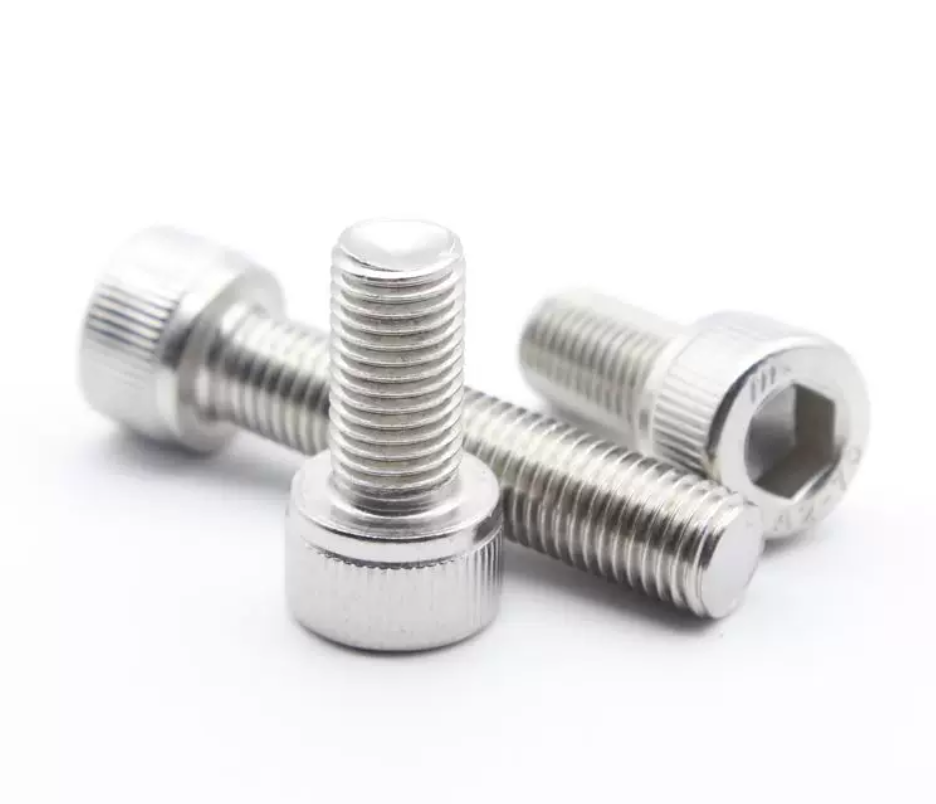
ENThe so-called stainless steel is a relative concept. Stainless steel is generally "rust free" in the atmosphere, and its corrosion resistance is conditional. Under certain conditions, stainless steel will also undergo corrosion. There is currently no stainless steel that is both rust resistant and corrosion-resistant in any corrosive environment. The more severe corrosion method that stainless steel bolts are prone to is localized corrosion; This mainly includes corrosion cracking, pitting corrosion, intergranular corrosion, crevice corrosion, and fatigue corrosion. Stainless steel screw manufacturer
1. The influence of environmental media
The type of inevitable corrosion usually occurs under certain specific environmental conditions, and pitting corrosion is prone to occur in media with specific subtypes; Within the surface of crevice corrosion or shielding, the separation between metal or metal and non-metal, and the accumulation of rivets, bolts, washers, valve seats, and loose surfaces; The necessary conditions for the occurrence of stress corrosion cracking are tensile stress (whether it is residual stress or external stress, or both) and the presence of specific corrosive media, etc.
The environment affects the corrosion resistance of stainless steel fasteners. Taking pitting corrosion as an example, the composition, concentration, pressure, temperature, pH value, and other environmental media have an impact on the corrosion resistance of stainless steel fasteners. Stainless steel is prone to pitting corrosion in media containing halide anions CI -, Br -, and I -. It is generally believed that pitting corrosion only occurs when the concentration of halogen elements reaches a certain level. The pitting potential of stainless steel fasteners is related to the concentration of halogen elements. If there are anions such as OH - and SO42- in the medium, they will have a corrosion inhibition effect on the pitting corrosion of stainless steel fasteners, and the effect will increase in the following order:; OH->NO3->AC->SO42->CIO4-。 The temperature, pH value, and flow rate in the same medium all affect the pitting corrosion of stainless steel fasteners; As the temperature increases, the pitting potential of stainless steel fasteners decreases, making them more prone to pitting corrosion; When the pH is greater than 10, the pitting potential increases, and when it is less than 10, the effect is minimal. As the flow rate of ordinary media increases, the pitting tendency decreases. For stainless steel fasteners, it is beneficial to reduce the flow rate of pitting corrosion. If the flow rate is too high, erosion corrosion will occur.
2. The influence of chemical composition
The corrosion resistance of stainless steel fasteners in certain environments is related to their passivation function. When steel is in a passive state, it can form a fine oxide film on the surface, which hinders the corrosion process and temporarily suspends the corrosion.
Chromium is the most fundamental element in stainless steel, and it is also a necessary element for the stability of the passivation film on the steel. When the chromium content is as low as 12%, the alloy can achieve complete self passivation before adjustment. The self passivation of alloys is selected at a certain level to enhance the corrosion resistance of stainless steel. Therefore, the chromium content in austenitic stainless steel cannot be less than 12%. Nowadays, many SUS304 alloys in the market have a chromium content of less than 12%.
Nickel is an element that enhances the corrosion resistance of steel, particularly in non oxidizing sulfuric acid. Nickel participates in chromium stainless steel and can enhance its corrosion resistance in sulfuric acid, acetic acid, oxalic acid, and neutral salts (especially sulfates).
Manganese can also enhance the corrosion resistance of chromium stainless steel in organic acids such as acetic acid, formic acid, and glycolic acid, and is more useful than nickel.
Molybdenum can be used for passivation of stainless steel, expanding its passivation medium planning, such as its application in hot sulfuric acid, dilute hydrochloric acid, phosphoric acid, and organic acids. Molybdenum containing stainless steel can form a molybdenum containing passivation film, which has high stability in many strong corrosive media and can also avoid damage to the film by chloride ions.
Silicon can enhance the corrosion resistance of steel in hydrochloric acid, sulfuric acid, and high concentration nitric acid. Stainless steel typically contains 2% -4% silicon, which can enhance its corrosion resistance in the aforementioned media.
3. The impact of organizational structure
Stainless steel has 143 trademarks according to the GB/T20878-2007 "Stainless Steel and Heat Resistant Steel Trademarks and Chemical Composition" standard. Ferritic stainless steel has 18 trademarks; Martensitic stainless steel has 38 trademarks; Austenitic stainless steel has 66 trademarks; Stacked hardening stainless steel has 10 trademarks; And austenitic ferritic (duplex) stainless steel has 11 trademarks. Generally speaking, among stainless steels with appropriate chromium content, austenitic stainless steel has poor corrosion resistance, followed by ferritic stainless steel, and martensitic stainless steel is inferior. Stainless steel screw manufacturer
3.1 Austenitic Stainless Steel
Austenitic stainless steel has excellent resistance to comprehensive corrosion in many media, but it is most active in intergranular corrosion and stress corrosion.
An important factor in the occurrence of intergranular corrosion is the organizational structure of the material itself, that is, the difference in chemical composition between the grains and grain boundaries of the metal or alloy itself, the grain boundary structure, the solid solution characteristics of the elements, the stacking and separation process, solid solution dispersion and other metallurgical problems, which lead to electrochemical inhomogeneity and make the metal prone to intergranular corrosion.
3.2 Ferritic Stainless Steel
Ferritic stainless steel also has a tendency towards intergranular corrosion, but compared to austenitic stainless steel containing carbon and chromium nickel, ordinary dull ferritic stainless steel is more susceptible to sensitization and has a higher tendency towards intergranular corrosion. Ferritic stainless steel has excellent resistance to stress corrosion cracking in chloride media, much stronger than austenitic stainless steel, but not necessarily without occurrence. Cracks often originate from intergranular corrosion and pitting corrosion.
3.3 Austenitic ferritic (duplex) stainless steel
Austenitic ferritic (duplex) stainless steel combines the characteristics of austenitic steel and ferritic steel. Generally speaking, the corrosion resistance of duplex stainless steel is similar to that of high chromium ferritic stainless steel or chromium nickel austenitic stainless steel containing appropriate chromium molybdenum, and is influenced by the comparison of microstructure. However, compared with austenitic stainless steel, duplex stainless steel has higher resistance to intergranular corrosion and stress corrosion cracking.
3.4 Martensitic Stainless Steel
The corrosion resistance of martensitic stainless steel is inferior to that of austenitic and ferritic stainless steel. Its primary benefit is that it can be strengthened by heat treatment and is suitable for fasteners with high requirements for strength, hardness, wear resistance, and certain corrosion resistance.
3.5 Stacked Hardened Stainless Steel
Stacked hardening stainless steel has the characteristics of high strength and good corrosion resistance. Its corrosion resistance is not only related to its composition, but also closely related to heat treatment. The separation of fine phases and aging reactions are harmful to the corrosion resistance function. The high-strength characteristics of this type of stainless steel may also cause hydrogen embrittlement or stress corrosion when used. It is necessary to pay attention to this. Stainless steel screw manufacturer