CN
 EN
A standard 42U cabinet once carried a few hundred kilograms of equipment. An AI rack can carry considerably more, in deeper chassis, with heavier power shelves, manifolds and cable management, and with service visits that remove and refit the same tray far more often than a conventional compute rack.
The fasteners in that cabinet do not become more complex. What changes is the cost of getting them wrong. A screw that loosens in transit, a grounding bond that degrades after repeated service, or a bag of mixed hardware at the bottom of a crate can each stop a build or a deployment.

Load, Vibration and Preload
Rack frames are usually galvanized steel or aluminum extrusions, and the fasteners mostly work in shear and tension at relatively short thread engagement. Two parameters decide whether the joint survives transport and service.
The first is property class. Class 8.8 is adequate for most sheet-metal brackets, bezels and cable management. Tray supports, power shelves, rail brackets and load-bearing frame joints should be evaluated at 10.9, and structural connections may need 12.9 with a defined preload.
The second is thread engagement. As a working rule, steel-to-steel joints need at least one times the nominal diameter, while aluminum needs roughly twice that, or a machine-thread insert. Short engagement in aluminum extrusion is a common source of stripped threads during field service.
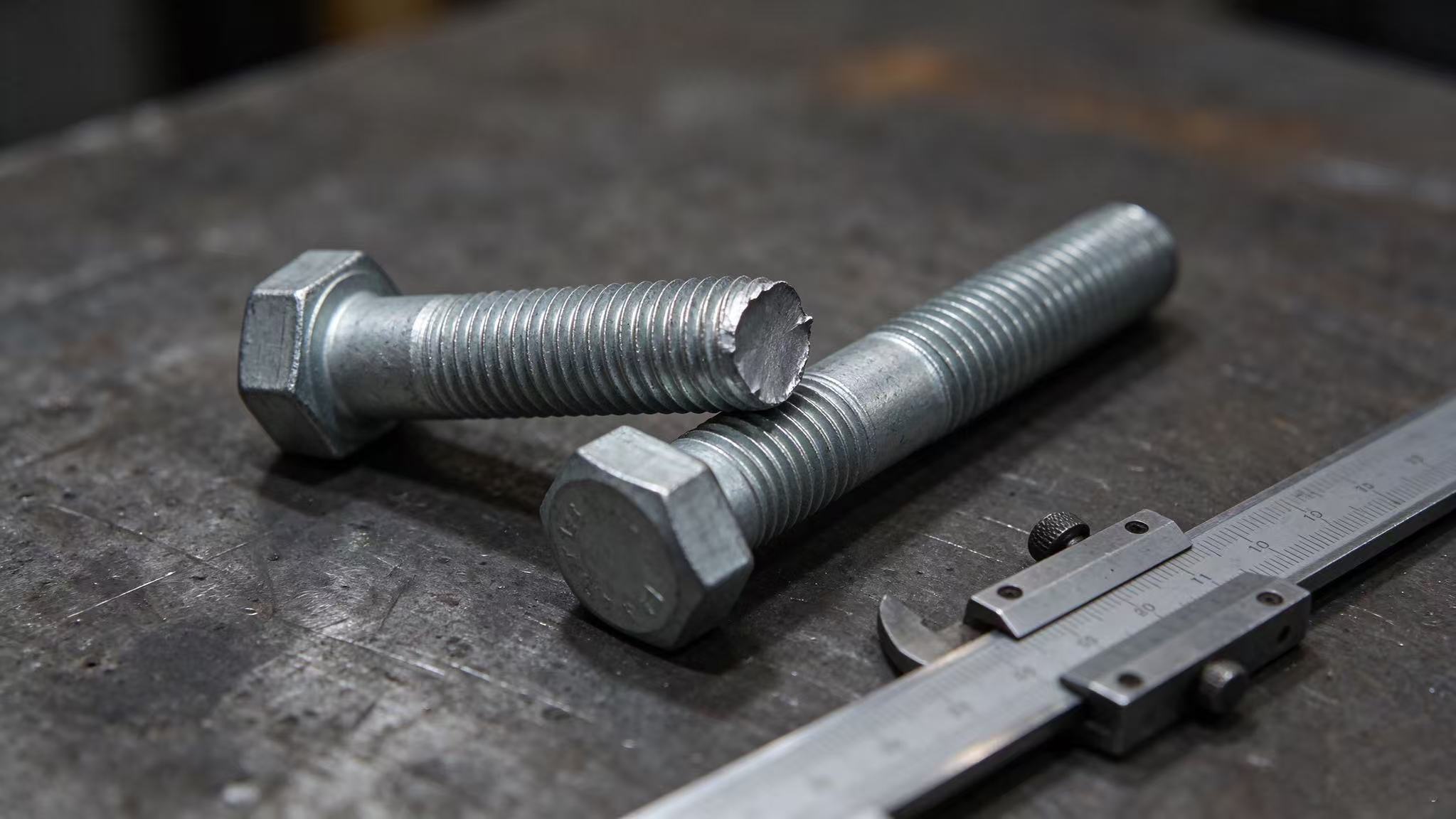
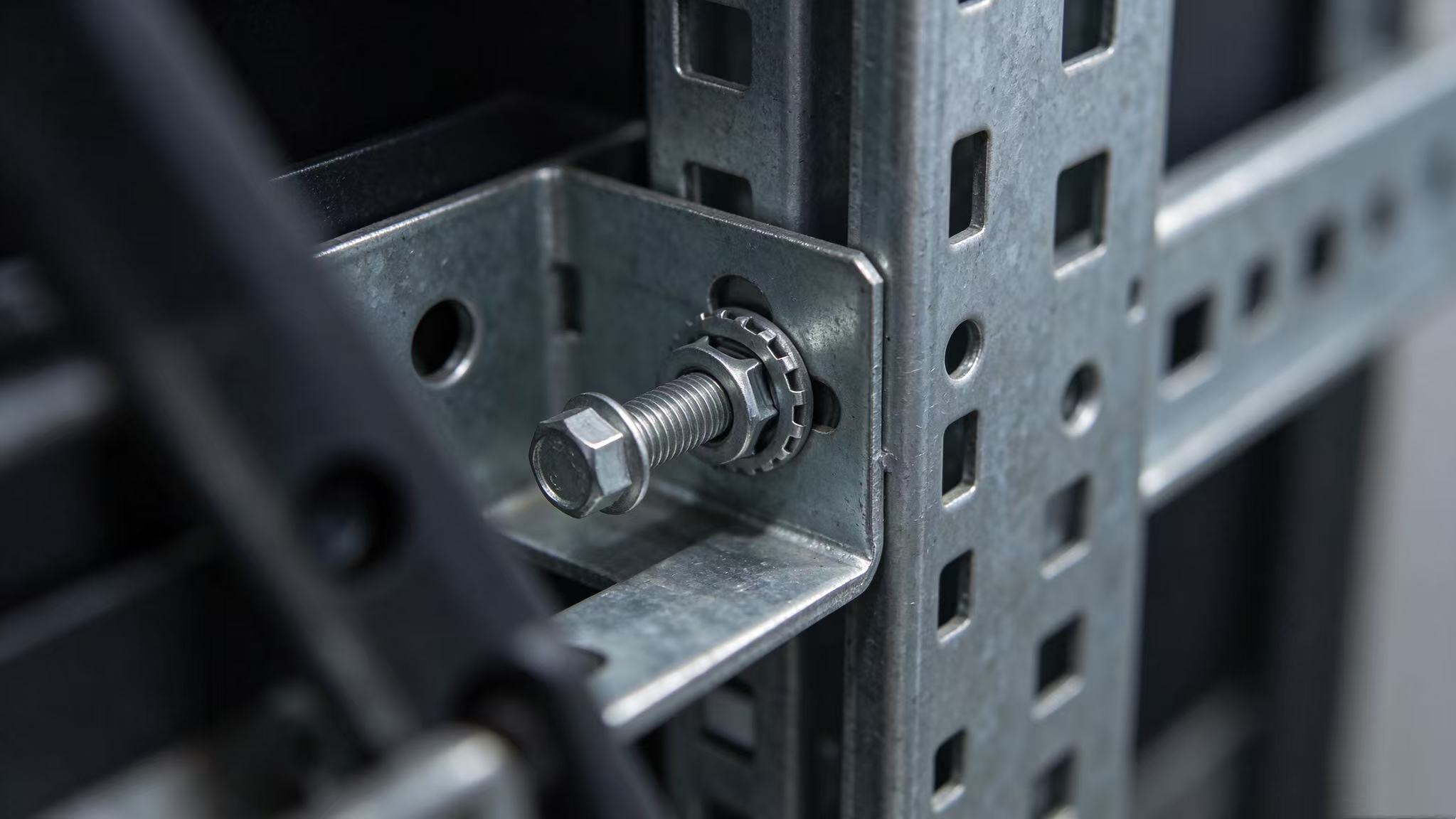
Vibration is the failure mode that shows up after the container arrives. Under transverse vibration, an under-torqued fastener can rotate loose even when the joint never sees an overload. For serviceable joints, nylon-patch or encapsulated lock screws are usually a better choice than liquid threadlocker: they survive several removal cycles, leave no residue in a live aisle, and keep torque values auditable. Serrated flange nuts and lock washers help in non-serviceable locations, but they do not compensate for a torque specification that was never verified on the actual joint.
Torque itself should be specified with a tolerance and checked with a calibrated driver at the start of production. Too little preload invites loosening; too much deforms the sheet metal, damages the coating under the bearing surface and can make the joint looser than intended.

Grounding and Electrical Continuity
Powder-coated panels insulate the very joints that hold a cabinet together. Bonding is normally handled by dedicated grounding paths, but fasteners that connect a painted panel to a frame can still create an unacceptable resistance if the contact area is coated on both sides.
Three choices matter here. Plating: zinc or nickel plating with a controlled thickness gives a stable contact resistance, while heavy organic coatings at the fastener do not. Masking: grounding points should be masked before painting, and the requirement should be stated on the drawing rather than left to the painter. Hardware: grounding washers or bonding strips at designated points are more reliable than relying on a standard flange screw.
For cabinets that sit in airflow paths, plating choice also carries a historical caution. Zinc whiskers grown on electroplated zinc surfaces—raised floor tiles and some cabinet parts among them—have caused short circuits in data centers. Zinc flake coatings or stainless steel avoid that failure path where a part is exposed to moving air.
Serviceability and Assembly Speed
A rack is assembled once and serviced many times. Fasteners that are convenient in the factory but difficult in the aisle shift cost to the operator.
Captive and panel screws keep hardware attached to the tray during removal, which matters when a technician is working above live equipment. Thumb screws and tool-less fasteners reduce service time at access panels and filter trays, but should not be used where a defined preload is required. Shoulder screws make a clean, repeatable pivot for hinges and rotating brackets, and combination screws with captured washers prevent the washer from separating in the field.
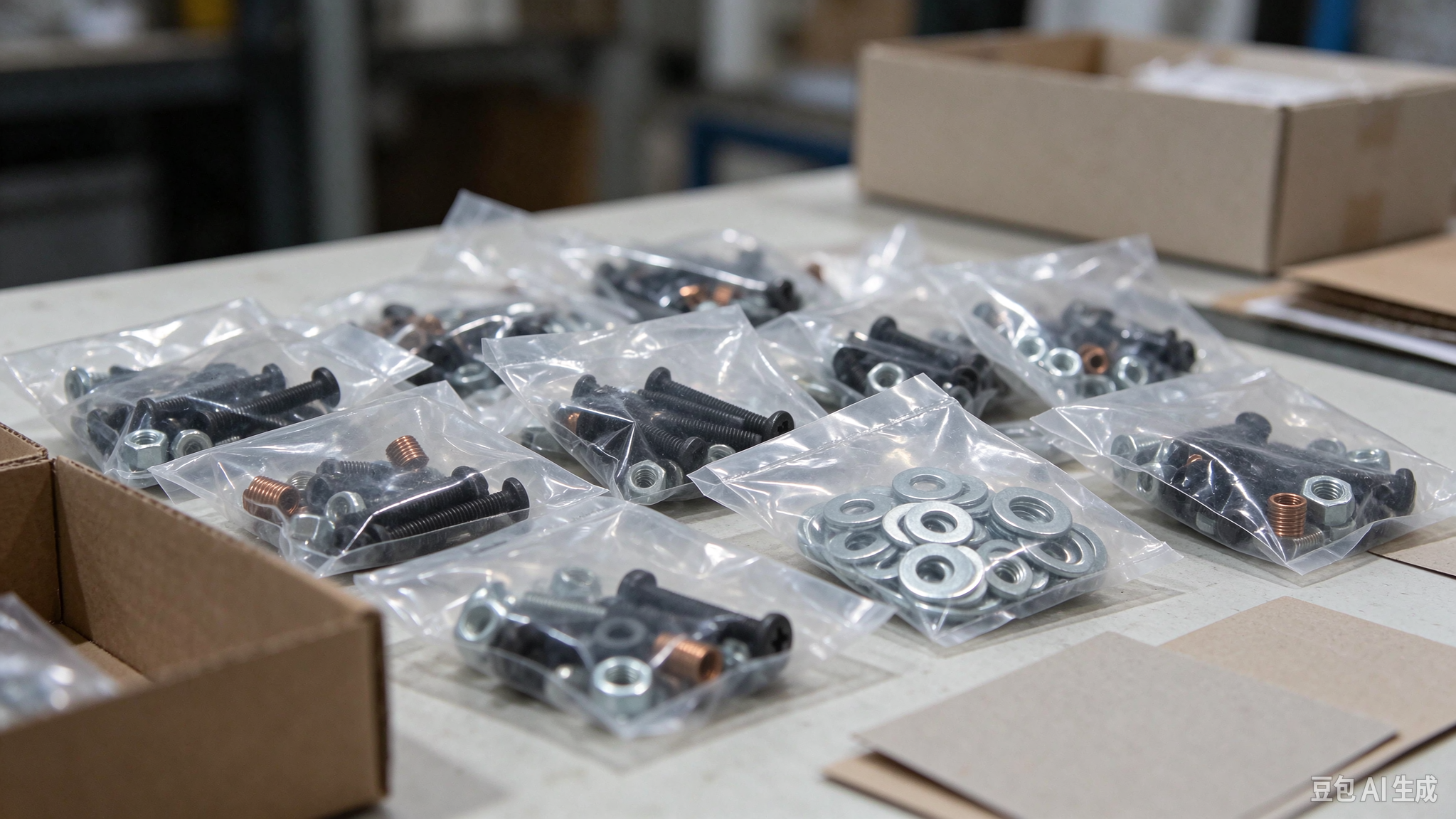
Kitting supports the same goal. Bag sets matched to an assembly step—rails, power shelf, cable management—reduce search time and the risk of an M6 screw entering an M5 hole. A printed part number and quantity on each bag, and a master carton label that identifies SKU and lot, do more for assembly speed than a lower unit price.
Documentation and Consistency
Rack programs usually run across several sites and multiple build revisions, so consistency between lots is part of the specification. Two points deserve attention at the quotation stage.
Thread standard and units. A US-designed rack may use ANSI inch hardware while the sheet metal is drawn in millimeters. Drawing review should confirm the thread standard, not only the diameter, because M6 and 1/4-20 are not interchangeable and both appear in rack bills of materials.
Compliance and traceability. RoHS and REACH declarations, material and plating records, and lot identification are commonly requested by rack OEMs and their customers. Plating color drift between two lots is not necessarily a functional problem, but it triggers inspection and questions at the receiving dock, so coating batches should be planned per program rather than per shipment.
Sourcing the Whole Rack Package
One rack program typically needs M3 to M8 screws, flange nuts, cage nuts for 19-inch mounting, washers, threaded inserts, and custom shoulder or captive parts. Buying them from one plant keeps thread fit and plating consistent across the bill of materials and reduces the number of incoming lots that must be inspected separately.
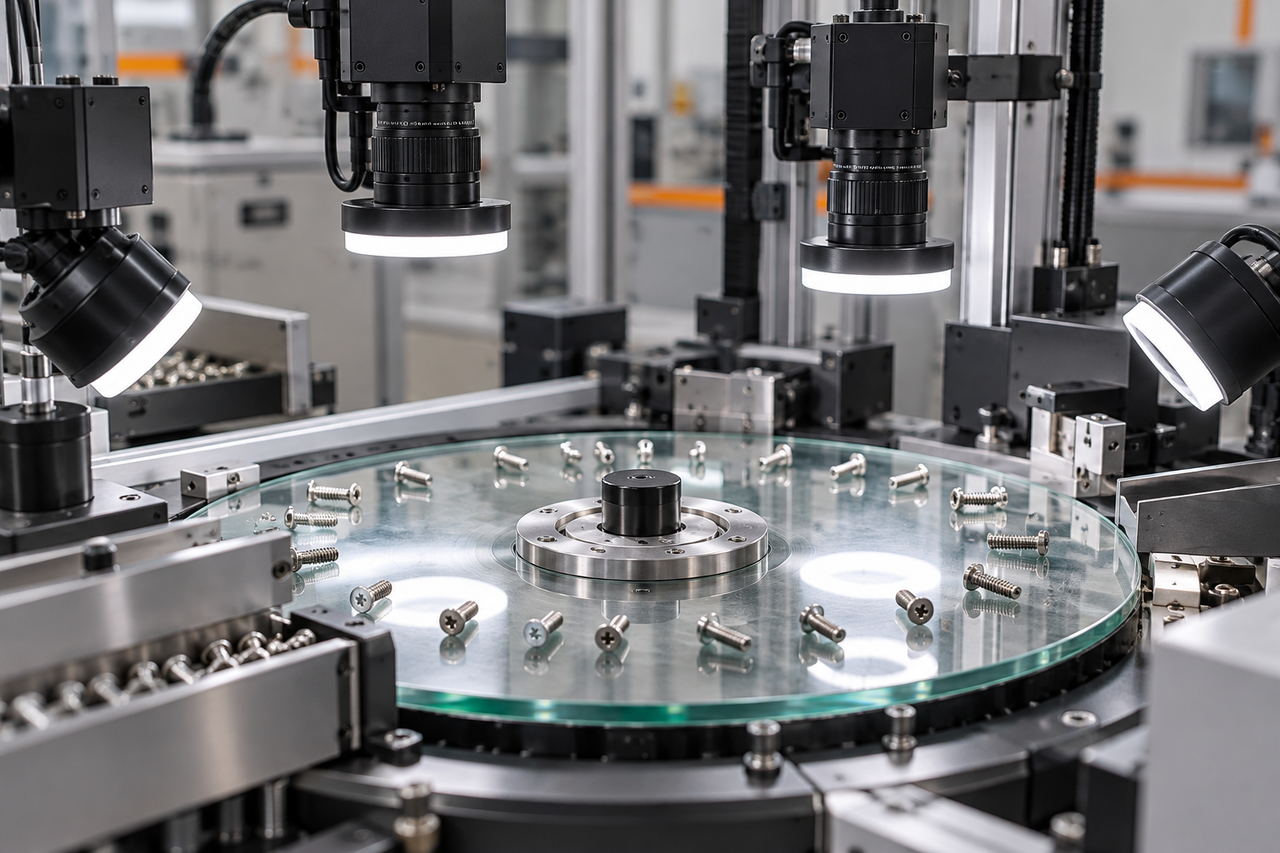
Dexin Metal manufactures screws, nuts, washers and custom fasteners from Ø1.0 mm to Ø36 mm, with more than 350 production machines and in-house inspection covering dimensions, hardness and salt spray. For rack and cabinet programs, we review the fastener bill of materials as a set—thread standard, plating, packaging and kitting—so that the hardware arrives in the form the assembly line can use.