

 CN
 EN
Hydrogen Embrittlement in High-Strength Fasteners
Release time:2026.11.25
Source:Dexin Metal
Views:8
Why a Plated Bolt Can Pass Inspection and Still Fail
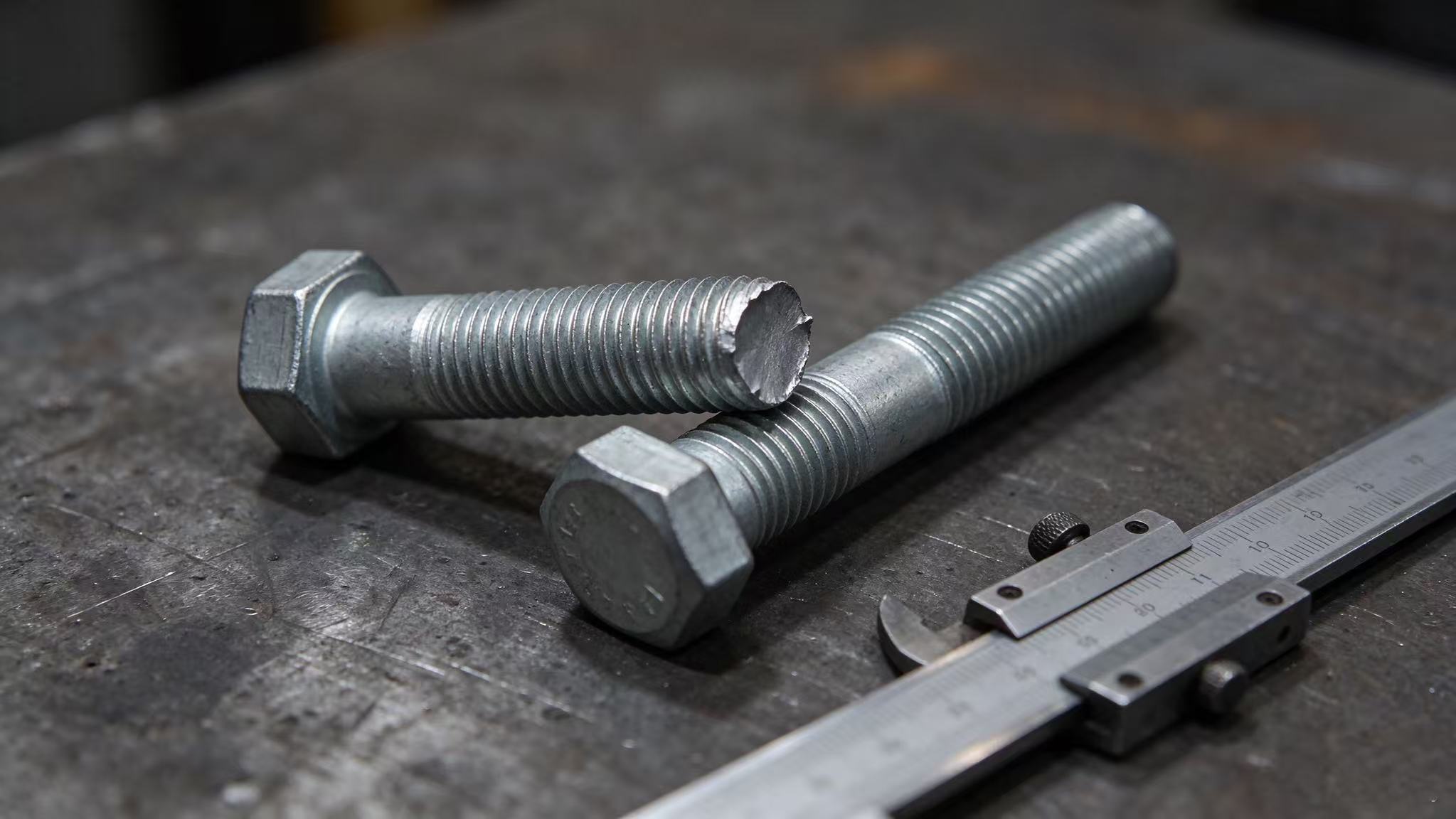
A class 10.9 or 12.9 bolt can pass dimensional checks, thread gauges, hardness verification and a full salt spray cycle, then crack in service days or weeks later under a load well below its rated strength. The fracture is brittle, the bolt shows no necking, and the joint is often one that was assembled correctly.
That failure pattern belongs to hydrogen embrittlement. It is not a dimensional defect and not ordinary corrosion. Because the damage appears after shipment—sometimes after installation—the cost usually lands on the customer's line, warranty and schedule rather than on an incoming inspection report.
What Hydrogen Embrittlement Is
Hydrogen atoms enter steel during acid pickling, electroplating, phosphating and some cleaning operations. Most remain near the surface, but part of it diffuses into the steel and collects where stress is highest: thread roots, sharp transitions, non-metallic inclusions and cold-worked areas.
Under sustained load, the accumulated hydrogen reduces the metal's ability to deform locally. A crack initiates and grows without the visible stretching that would normally warn of overload. Failure is delayed rather than immediate—hours, days or months—which is why one inspection at the time of shipment cannot rule it out.
Where the Risk Enters the Process
Susceptibility is a function of strength, stress and process. Coating color tells you nothing about it.
Strength level. Risk rises sharply as hardness and tensile strength increase. Parts at or above roughly 32 HRC, which includes many class 10.9 and 12.9 bolts, deserve specific attention.
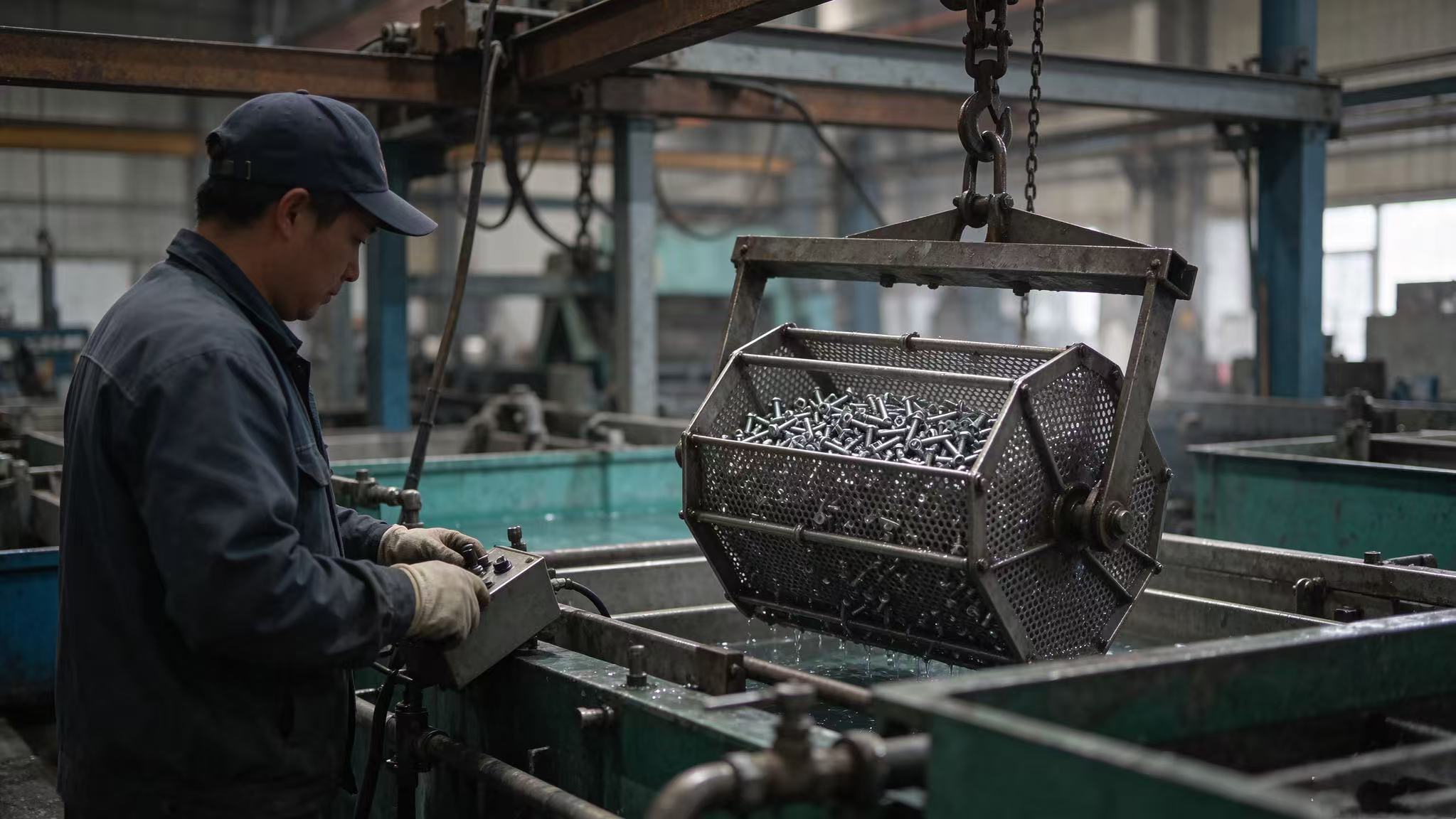
Pickling and electroplating. Acid pickling removes scale but generates hydrogen at the steel surface. In electrolytic zinc plating, the part itself is the cathode where hydrogen is produced. Long plating times and thick deposits increase the amount absorbed.
Geometry. Small thread roots, undercuts, sharp radius entries and thin-walled high-strength screws concentrate stress and leave little material volume to redistribute it.
Service load. A bolt tightened beyond its intended preload, or one that carries sustained bending rather than pure tension, is more likely to fail.
Heat treatment belongs to the same picture. A lot deliberately hardened to the top of its property class, or one that sees a second heat cycle after an adjustment, sits closer to the risk boundary than the same drawing held at the middle of the range.
Controls That Actually Reduce Risk
The first lever is design. Do not specify a higher property class than the joint needs, and keep hardness inside the target band instead of at its upper limit.
The second is the process route. Where geometry allows, mechanical or alkaline descaling can replace acid pickling. Shortening the interval between cleaning and plating reduces the time hydrogen has to diffuse into the steel.
The third is coating selection. Zinc flake systems according to ISO 10683 are applied without an electrolytic step and therefore avoid the main hydrogen source. Where electroplating is required for appearance, conductivity or compatibility, the plating process should be chosen and controlled with embrittlement in mind, not only corrosion hours.
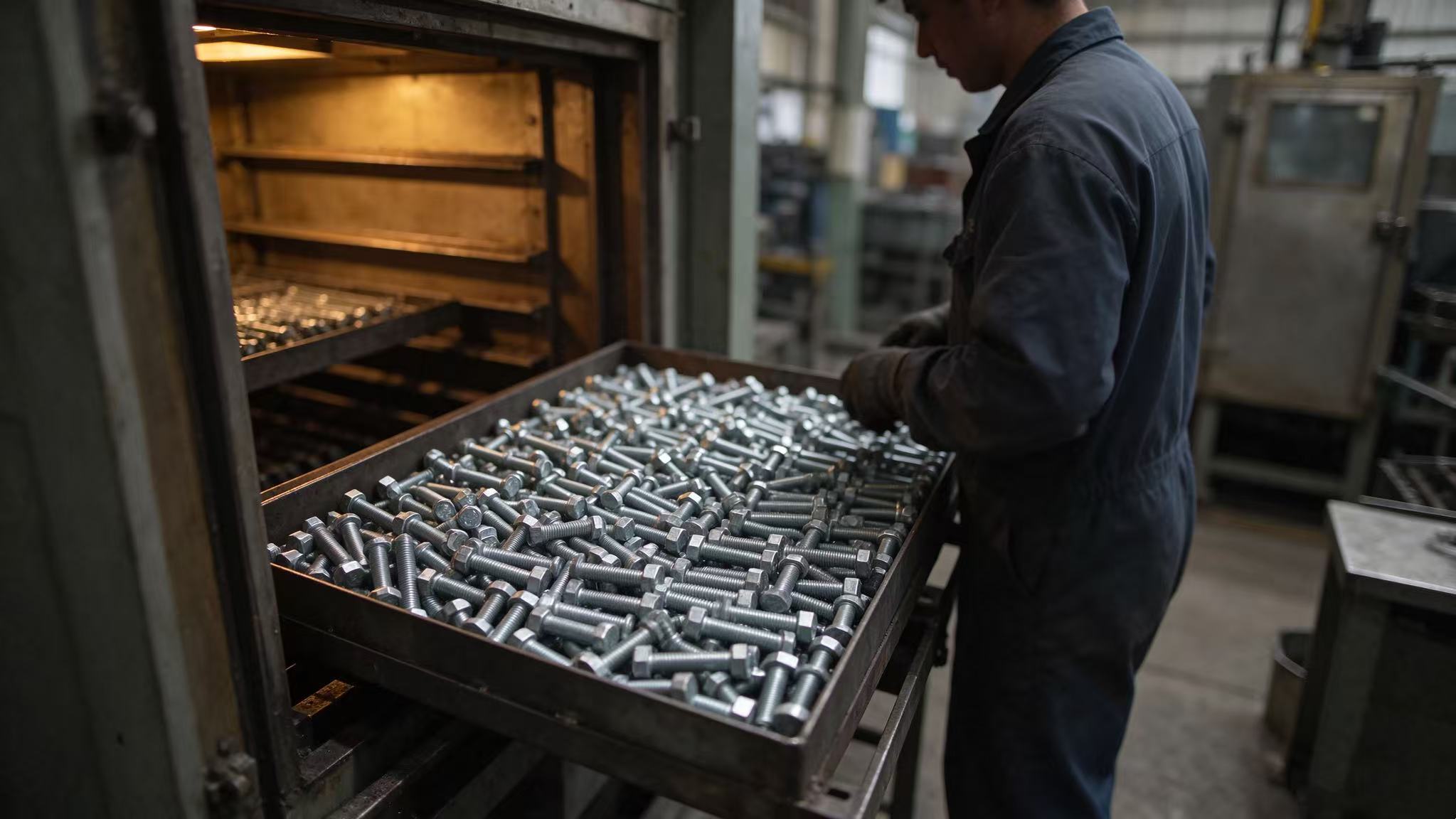
The fourth is post-plating heat treatment. Baking drives hydrogen out before it settles at stress concentrations. ASTM B850 puts the timing requirement first: treatment should begin as soon as possible after plating, preferably within one hour and not later than three hours. Temperature and duration are then selected from the part's tensile strength; many classes fall in the 190–220 °C range, with durations measured in hours rather than minutes.
Timing matters because zinc is an effective barrier to hydrogen diffusion. Published industry guidance for zinc-electroplated parts above about 39 HRC calls for a minimum of 8–10 hours, and up to 24 hours for heavy sections, and notes that a four-hour bake at around 190 °C is often insufficient. Baking also has to come before chromate passivation and before any grinding or mechanical finishing.
Rework needs separate control. Stripping and re-plating a high-strength lot adds a second hydrogen cycle. If rework is unavoidable, the bake must be repeated and the lot re-verified instead of being released on the original approval.
Verification: Process Records and Sustained Load
Hydrogen embrittlement is a process capability, not a dimension, so it cannot be checked with a caliper or judged from a salt spray report.
Process qualification reviews the plating line, the time from plating to oven, the temperature profile across the load, and the records kept for each lot. ASTM F1940 is used for process control verification of plating and coating lines; ISO 4042 defines coating systems and the associated embrittlement-relief requirements for electroplated fasteners.
Lot verification uses a sustained-load test. ISO 15330 holds the fastener under a defined load for a set period and looks for delayed fracture—the closest practical reproduction of the failure mode. For critical joints, it is worth adding this test to the first-article and periodic requalification plan rather than waiting for a field failure.
Failure analysis closes the loop. A brittle fracture at the thread root with no reduction in cross-section is the signature; metallography and hydrogen measurement can confirm it and separate it from overload or a material defect.
What Buyers Can Do at Quotation
Three questions cover most of the exposure: which property class is specified, which coating process will be used, and what post-coating treatment and records will accompany the lot. For high-strength plated parts, ask for the baking window and the sustained-load result, not only the salt spray hours.
Dexin Metal produces carbon steel and stainless steel screws and nuts across a wide size range, and reviews coating and post-coating requirements with customers when high-strength plated parts are quoted. Clarifying those requirements before the process sheet is released is cheaper than investigating a delayed failure after installation.
News recommendation
25 Years as IKEA Priority Supplier: Reliable EU-Standard Furniture Hardware Solutions
2026-08-26
Chinese New Year 2027: A Fastener Order Calendar for Overseas Buyers
2026-11-25
One PO, One Container: How Consolidated Fastener Supply Reduces Receiving Work
2026-11-25

Fasteners in AI Server Racks: Density, Serviceability and Grounding
2026-11-25
Reducing the Total Cost of Fastener Purchasing—from RFQ to Inspection
2026-11-06