

 CN
CN EN
EN
Custom Special-Shaped & High-Precision Standard Fasteners: On-Site Manufacturing Capability Verification Guide
Release time:2026.10.14
Source:Dexin Metal
Views:6
Process Standards, Mold Strength and Batch Stability That Qualified Fastener Suppliers Must Master
1. The Core Gap of Finished Fasteners Lies in Process Control
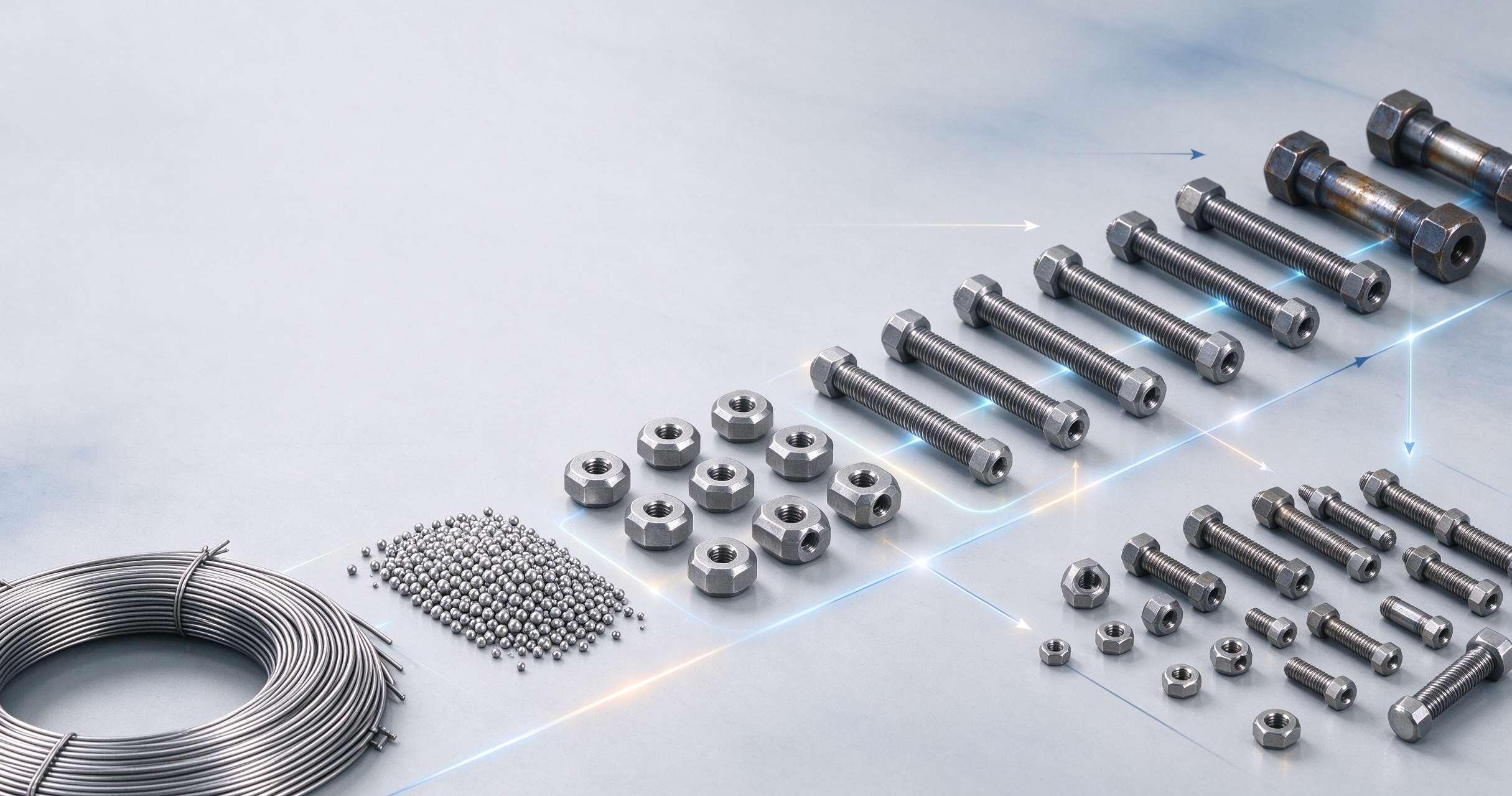
Procurement decisions often rely on drawings, quotations and test reports, yet the durability and stability of fasteners are ultimately determined by the full production process. Cold heading is the mainstream process for over 80% of screws, bolts and nuts, featuring continuous metal flow lines, high material utilization and 10%-20% better mechanical performance than traditional cutting processing.
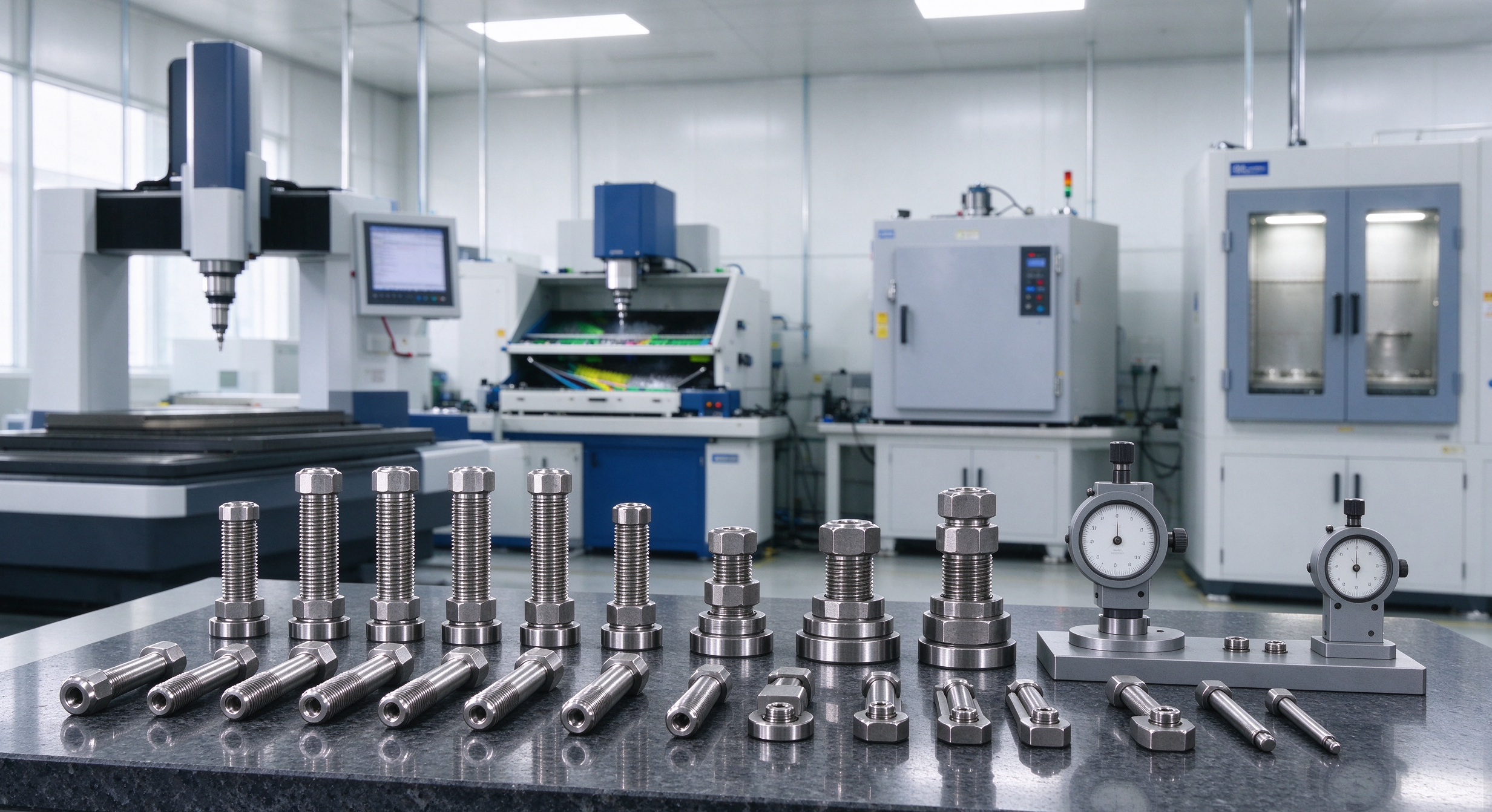
A complete standardized process includes wire spheroidizing annealing, pickling phosphating, wire drawing, cold forming, thread rolling, quenching & tempering heat treatment, surface treatment and full inspection. Any parameter deviation will cause tolerance errors, strength fluctuations and inconsistent batch quality. Industry data shows that high-strength fasteners (≥8.8 grade) achieved double-digit output growth in H1 2026, with market share rising to 38%. Fastener export volume and value also increased year-on-year, reflecting the industry’s structural upgrade from low-end standard parts to high-precision customized products, making on-site process verification essential for buyers.
2. Custom Special-Shaped Fasteners: Verify Mold R&D and Process Forming Capabilities
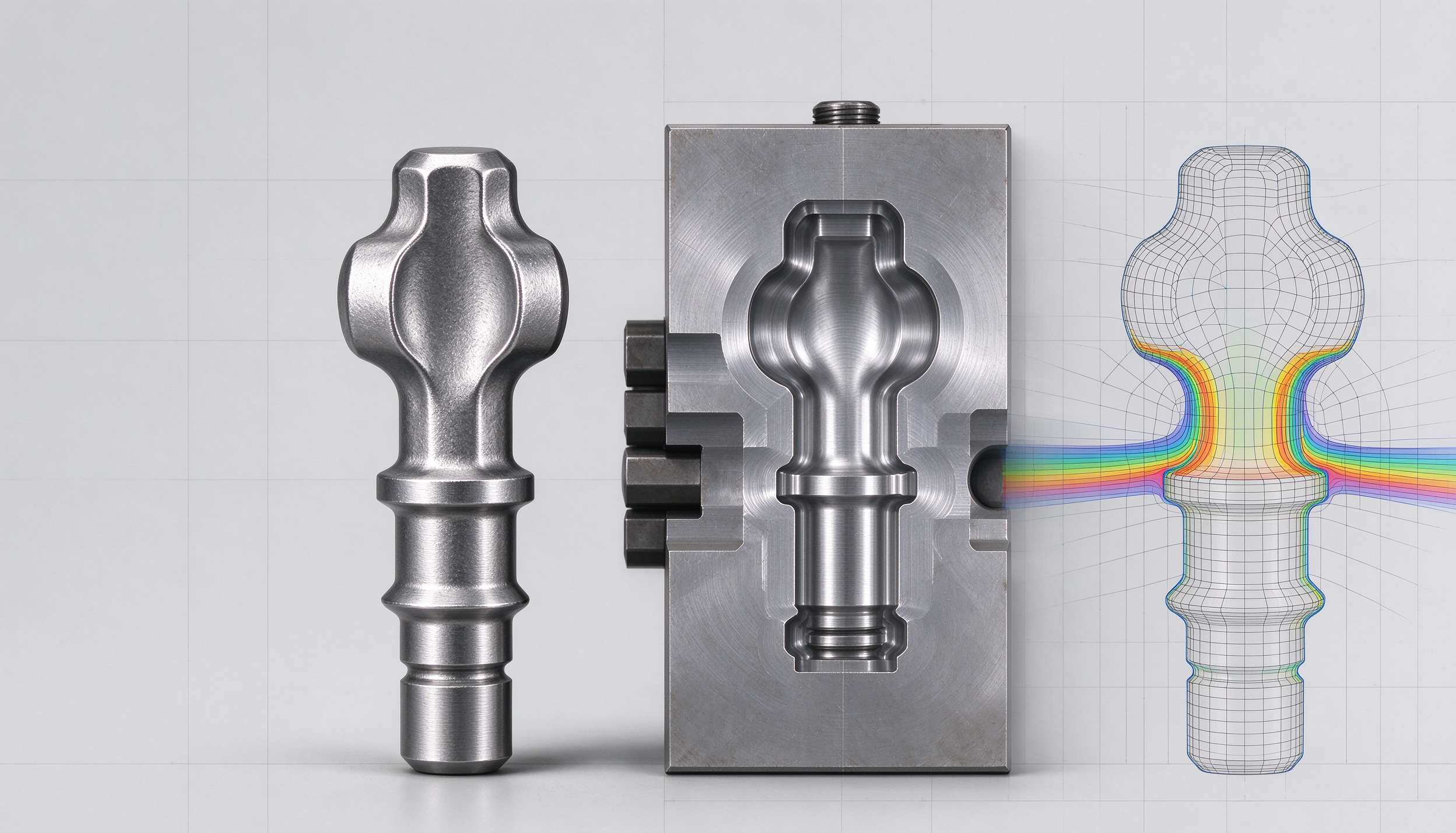
The difficulty of special-shaped fasteners lies not in complex appearances, but in precise deformation allocation, cavity mold design and station planning, which directly determine product accuracy, yield and production cost.
Mold quality is the core factor affecting batch stability. Optimized high-speed tool steel, vacuum heat treatment and plasma nitriding treatment can increase mold surface hardness by 28%, wear resistance by 35% and service life by 2.8 times, controlling precision within ±0.01mm. Professional cavity optimization stabilizes special-shaped product tolerance at ±0.05mm and extends mold life effectively.
Reasonable station allocation avoids forming defects such as folding and insufficient filling. Strict forging ratio standards govern forming processes: one-time forming for ratios ≤2.25, two-time forming for 2.25-4.5, and three-time forming for 4.5-6. Excessive length-diameter ratios will cause bending and double-drum deformation, while thin-wall and deep-hole structures are prone to hidden folding defects. Reliable suppliers must conduct finite element simulation, record trial mold optimization data, and clarify risk control for each station.
Most importantly, sample qualification does not equal mass production stability. On-site verification must focus on inter-process inspection, first-piece approval, SPC data monitoring and mold management ledgers to ensure consistent quality across batches.
3. High-Precision Standard Fasteners: Verify Process Data Chains Instead of Single Certificates
High-strength and automotive-grade fasteners bear critical assembly safety responsibilities. A single qualified test certificate cannot prove long-term stability; complete traceable process data is the core of quality assurance.
- Material batch traceability: Qualified suppliers must provide full heat number traceability consistent with physical labels, plus spectral re-inspection records. Strict control of carbon equivalent, phosphorus, sulfur and boron content ensures stable mechanical properties of high-grade fasteners.
- Heat treatment curve validation: Quenching and tempering determine fastener strength and toughness. On-site verification requires checking furnace temperature uniformity, instrument calibration records, hardened layer depth, grain size and decarburization layer data. For 10.9-grade and above products, qualified martensite ratio and re-tempering test records are mandatory.
- Friction and torque coefficient control: Assembly preload stability depends on controllable friction coefficient (0.10-0.15) and torque coefficient (0.10-0.16) with low variation. Batch testing rather than random sampling ensures consistent assembly performance of finished products.
- Salt spray resistance and hydrogen embrittlement control: Corrosion resistance must match actual service environments instead of unified standards. Electroplated high-strength fasteners require standardized baking processes to avoid hydrogen-induced delayed fracture, a common hidden failure risk that cannot be eliminated by final inspection alone.
- Full inspection records: Optical sorting, eddy current testing, magnetic particle inspection and go/no-go gauge testing must have standardized parameters, complete NG product disposal processes and long-term data retention mechanisms.
4. Why On-Site Verification Is Irreplaceable for Fastener Procurement
Online quotations and product specifications cannot reflect three core manufacturing strengths. First, on-site physical comparison intuitively distinguishes differences in dimension accuracy, surface finish and thread consistency among suppliers. Second, professional technical communication effectively verifies the supplier’s problem-solving capability and process accumulation. Third, field inspection confirms independent mold workshops, professional laboratories, self-operated heat treatment and standardized outsourcing management, avoiding false qualifications on paper.
In the fastener industry, buyers with refined verification standards always maintain long-term stable supplier partnerships, minimizing quality risks and after-sales costs.
About Dexin Metal
Dexin Metal is a professional high-precision and custom fastener manufacturer with over 20 years of standardized production experience. We have long passed the strict IKEA IWAY supplier audit, consistently scoringabove 90 points for decades, fully complying with international standards for production environment, process management, quality control and sustainable manufacturing. Our self-built mold workshop, independent testing laboratory and full-process controlled production line enable independent R&D and mass production of complex special-shaped fasteners and high-precision standard fasteners. We strictly implement finite element forming simulation, full-process parameter recording, batch data tracking and full-item inspection, effectively avoiding hidden defects such as folding, tolerance deviation and hydrogen embrittlement. Adhering to standardized and transparent production management, Dexin Metal provides stable, high-quality OEM/ODM fastener solutions for automotive, furniture, construction and mechanical industries worldwide, winning long-term recognition from global high-standard clients.
News recommendation

25 Years as IKEA Priority Supplier: Reliable EU-Standard Furniture Hardware Solutions
2026-08-26
2027 Fastener Export Target‑Market Trend Analysis: Europe‑America, Southeast Asia, Middle East
2026-10-12
Kitchenware Fasteners Explained: Function & Selection Guide for Pot Lid Screws
2026-10-08
Outdoor Screw Selection: Anti-Corrosion Performance & Service Life
2026-10-06
What are common pins? Introduction to pin types.
2026-09-30